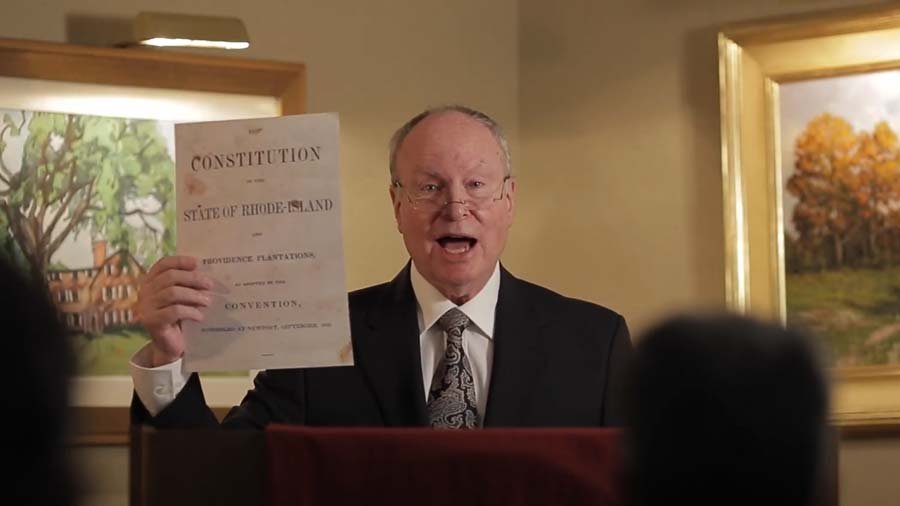
Don’t let wealthy special interests buy RI’s Constitution.

Protect reproductive rights.

Protect workers’ rights.

Protect workers’ rights.

Save taxpayer money.

We are RI Citizens for Responsible Government.

In November, voters will be asked whether or not the State should hold a constitutional convention. We are building a diverse statewide coalition of individuals and organizations who are uniting to oppose this ballot measure and to urge a “no” vote in November on the calling of a convention. These member organizations and individuals are united in opposing a constitutional convention by these shared beliefs:

We Must Protect Our Civil Rights

  • Approval of a constitutional convention is a significant threat to our civil rights. Across the country, efforts to undermine affirmative action, reproductive rights, LGBTQ+ rights, worker rights, and immigrant rights have become fodder for expensive statewide campaigns mounted by well-funded, out-of-state special interests.

Our Constitution is Not For Sale

  • The U.S. Supreme Court has ruled that there can be no government limits on how much money corporations spend on referenda campaigns, including proposed constitutional amendments that come out of a convention. We now live in a world of unfettered special interest spending and out-of-state money that distorts campaigns.

We Already Have Effective Means of Changing Governance

  • Rhode Island does not need a constitutional convention to change our governance. Constitutional changes on critical issues like separation of powers and voting rights may be done, and have been done in the past, by questions placed on the ballot by the General Assembly.

Our Money Is Better Spent Elsewhere

  • Constitutional conventions are expensive. The bipartisan preparatory commission has estimated that the cost could be close to $5 million taxpayer dollars. There are much better uses and services where that money could be spent.

While our opponents claim a Constitutional Convention could improve our governmental structure, a constitutional convention is more likely to serve as a vehicle for socially divisive amendments. In fact, in 1986 at our last Convention in Rhode Island, the major constitutional amendment that arose was a proposal declaring that life begins at conception.

Passage of a constitutional convention is likely to lead to disastrous results for causes that our coalition believes in. We urge you to join us in not only opposing this ballot measure in November, but helping us raise awareness of this significant threat to our rights and liberties.

Fast Facts about a Constitutional Convention

Question 1 will ask voters if they approve the calling of a state constitutional convention.

A vote to “approve” Question 1 means you do want a constitutional convention to happen; a vote to “reject” means you do not want a constitutional convention to happen.

Under our state Constitution, this question is asked every 10 years. 

A constitutional convention is when elected delegates from across the state are charged with proposing amendments to the state Constitution. There are no limits on what amendments can be proposed once a convention meets.

The last state constitutional convention in the nation was held in Rhode Island in 1986 — 40 years ago — and led to the passage of a number of anti-civil rights amendments to our Constitution.

While a constitutional convention is often billed as an opportunity for voters to have a direct voice in state government, it’s not that simple.

For example, there is no limit to how much money can be spent by special interest groups outside of our state to influence what amendments get put on the ballot, meaning Rhode Islanders don’t actually have total control of what happens. Conventions are also likely to be extremely political, as many of the people who get elected as delegates to the convention have political connections.

Still not convinced? Read about what happened at the last constitutional convention in the next FAQ.

At Rhode Island’s last constitutional convention in 1986, the convention proposed, and the voters approved, an anti-abortion amendment, an amendment restricting the fundamental right to bail, and an amendment expanding the number of people losing their right to vote because of a criminal record. As this suggests, the convention process is very unlikely to protect the rights of the minorities. Here are a few other “highlights” from 1986:

  • The convention approved so many constitutional amendments — 25 — that in order to ensure they could fit on the ballot, the amendments were bundled into 14 confusing ballot questions. As a result, if you wanted to support, for example, adding a “free speech” clause to the Constitution, you also had to vote for a bundled provision eliminating legal protection for abortion rights.
  • The General Assembly kept a pledge that no current legislator would run as a delegate. Instead, seven former legislators won seats to the convention. At least four relatives of sitting legislators were also elected, including — no lie — the Speaker of the House’s son and sister. Seventeen convention delegates used their participation as a steppingstone to running for a General Assembly seat that very same year.
  • The push for a 1986 convention was also supposedly all about “reforming” government, but the most significant and controversial proposal to come out of that convention was a constitutional amendment declaring that “life begins at conception,” designed to ban abortions in the state. In fact, the 1986 convention passed not one, but two, amendments to restrict reproductive freedom.
  • While some people claim a convention is necessary to deal with important structural issues that the General Assembly refuses to address, like line-item veto and political redistricting, these issues were also considered at the 1986 convention — and rejected. In fact, the convention came close to approving a constitutional amendment to expand legislative appointment powers over state agencies; ultimately, it was the General Assembly, not a convention, that approved a “separation of powers” amendment.
  • Some of the “reform” amendments actually approved by the convention — dealing with four-year terms for state officers, legislative pay, and judicial selection reform — were rejected by the voters because they were so watered down. Voters approved these measures in future years, but only after the General Assembly proposed them in revised form.

The most important thing, other than voting “no” on Question 1, is to spread the word. Tell your friends, family, and coworkers about why a Constitutional Convention could be devastating for our rights and liberties, and urge them to make a voting plan for the November election to reject Question 1.

For general information about voting, go to the Secretary of State’s website: vote.sos.ri.gov